The technician handles the equipment, but a few things at the venue and in the tournament rules must be settled by the organiser first. Here is the full checklist.
When renting Sol26 VAR, a technician travels with the equipment and operates it throughout the match. Even so, for set-up to take around 60 minutes and the system to run reliably from the first match, the organiser needs to prepare some conditions at the venue and in the tournament rules.
The checklist below covers six areas: power, camera positions, the control desk and referee monitor positions, the set-up schedule, coordination with the referees and the rules in the tournament regulations.
Power
The equipment comes in two flight cases: the control desk case for the technician and the monitor case for the head referee. Each case needs its own power supply, so the equipment area must have stable sockets for the whole playing period.
- A socket near the control desk position
- Power for the referee monitor at the touchline
- Confirmation from the venue owner on power use during match hours
Camera positions
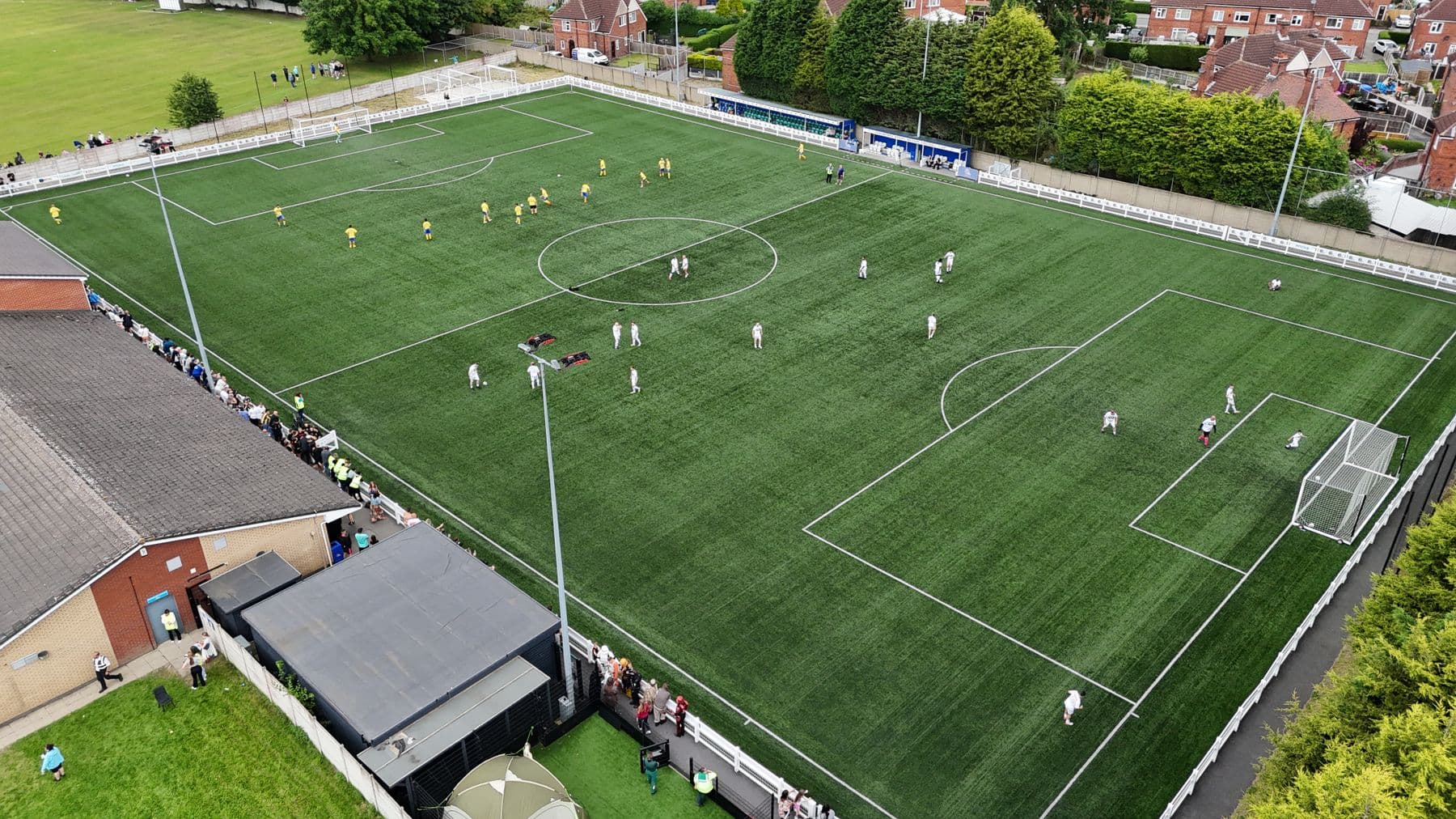
Cameras go at the most sensitive points: both goal lines to watch the line, and two diagonal corners to catch offside, handball and contact in the box. Depending on pitch size, the system uses 4 to 8 cameras mounted on masts 5 to 6 m high.
The organiser should confirm with the venue owner that masts may be raised at these corners and will not block spectator walkways. Cameras connect to the control desk by powered network cables, so the cable route from each corner to the desk also needs to be planned.
Control desk and referee monitor
The control desk is where the technician sits for the whole match, with the Live and Replay screens. The referee monitor is connected to the desk by a signal cable and placed at the touchline, where the head referee can reach it quickly but away from players and spectators.
Match schedule and set-up time
The technical team arrives 60 minutes before kick-off to check lighting, raise camera masts and set up the control desk and referee monitor. The organiser should send the match list and kick-off times so the schedule can be planned, especially for tournaments with several match days or several venues.
Agreement with the referees
Before the tournament, the technician agrees the VAR request signal with the referees and tests the intercom between the pitch and the control desk. The organiser should appoint a referee contact to settle these points.
- The signal the referee uses to request a review
- Reviewable incidents: goals, penalties, straight red cards, mistaken identity, offside
- The head referee makes the final call after viewing the review monitor
- An intercom test before the first match
Rules in the tournament regulations
Teams need to know in advance that the tournament uses VAR and when it applies. If coaches are given the right to request a review, the regulations should state how many requests are allowed and how to make them. The regulations should also say that VAR clips are used to settle post-match complaints.
- 1Confirm power at the control desk and referee monitor
- 2Confirm camera mast positions with the venue owner
- 3Send the match list and kick-off times
- 4Appoint a referee contact and schedule the signal briefing
- 5Add the VAR rules to the tournament regulations
Frequently asked questions
- Does the organiser need someone to operate the equipment?
- No. The rental includes a technician who sets up, operates during the matches and exports clips after the tournament.
- How are cameras mounted if the venue has no tall posts?
- The technical team brings masts and tripods to mount cameras at the required corners. The organiser only needs to confirm with the venue owner that these positions can be used.
- Can referees who have never used VAR work with it?
- Yes. The head referee only watches the review monitor, which shows the angle chosen by the technician, and is briefed on the request signal before the tournament.
- How far ahead should the schedule be sent?
- The organiser should send the match list and kick-off times early so the team can plan set-up 60 minutes before each match day.