Teams and organisers often ask what makes a portable VAR different from filming on a phone and scrolling back. This article describes the structure of a proper VAR system for small pitches.
Players and tournament organisers often ask what makes a portable VAR different from filming on a phone and scrolling back. The difference lies in four components designed specifically for 5 and 7-a-side pitches and operated in sync throughout the match.
This article describes the cameras, the control station, the intercom, the review monitor, how the equipment is packed and how long an incident takes to resolve.
Synchronised multi-angle cameras
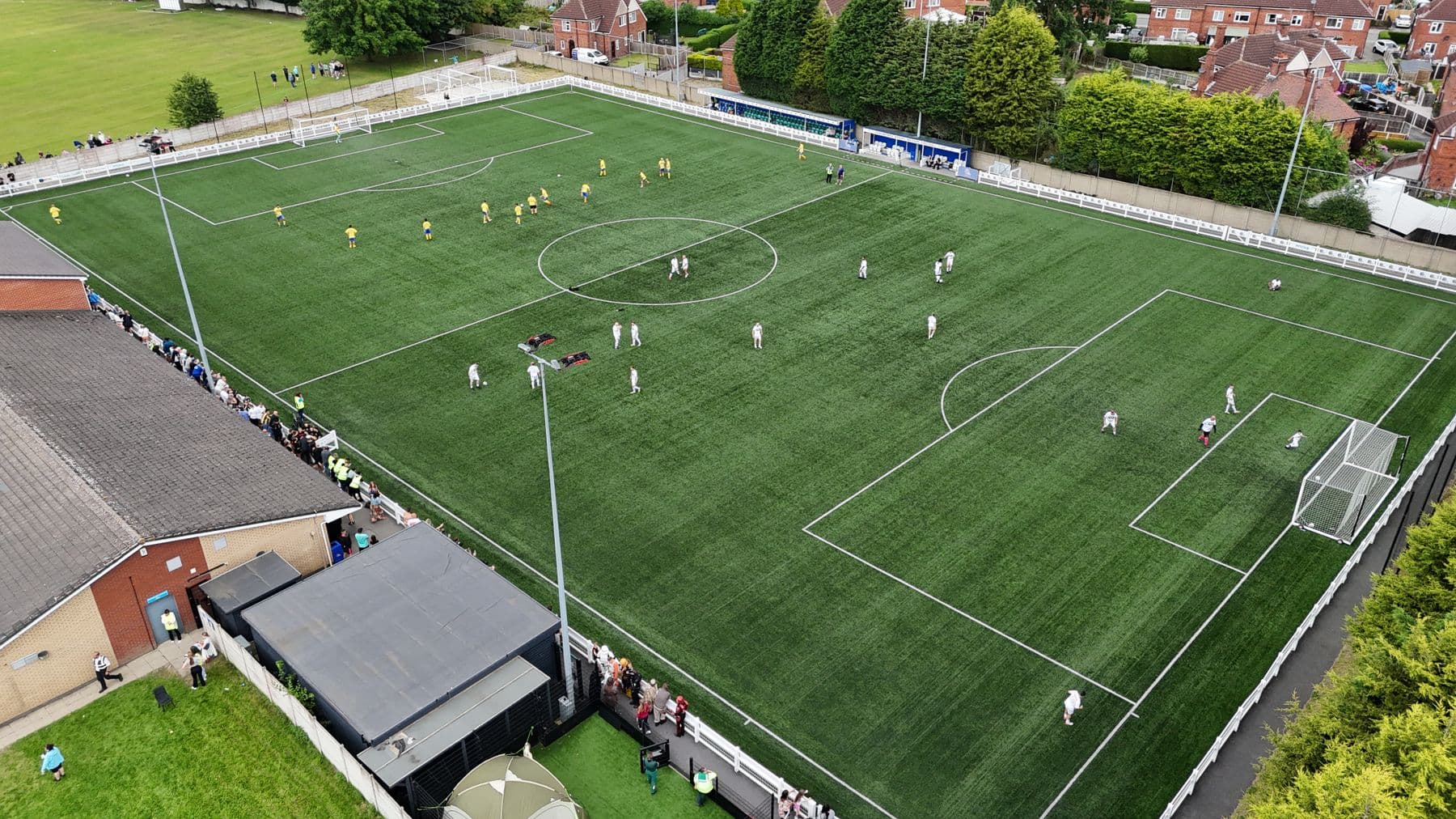
Cameras are placed at the most sensitive points: both goal lines to watch the line, and two diagonal corners to catch offside, handball and contact in the box. Depending on pitch size, 4 to 8 cameras are mounted 5 to 6 m high to cover the whole pitch and limit blind spots.
Every angle records at the same time, so when you scrub back, all cameras stop at the same moment. A phone filming from one side cannot do this.
An independent control station
The technician works at a control station with two screens: Live, which always streams with under 1 second of delay, and Replay for review. The panel has a jog knob for scrubbing at three speeds, a knob that jumps to flagged points, and playback at normal, half and one tenth speed.
Each camera tile can be zoomed up to 10x on the point of contact. Three views are available: a 4-camera grid, a 9-camera grid and one camera full screen. The full match video is stored for extraction after the game.
Intercom between the VAR desk and the head referee
The VAR official and the head referee talk directly over an intercom, privately and without delay. This keeps players from crowding the referee while a decision is pending and keeps the match flowing.
A pitch-side review monitor
A dedicated monitor at the touchline lets the head referee review the selected angle and make the final call. It mirrors exactly the camera, moment and zoom level the technician has selected at the control station.
Equipment packed in flight cases
All equipment travels in shock-proof flight cases so it can be taken to any venue. The first case holds the control station with two screens and the knob controller. The second holds the head referee's monitor. Cameras, tripods, power and connection cables come with them, enough to set up in about 60 minutes before kick-off.
Review time and incidents covered
A review usually takes 20 to 40 seconds, short enough not to cool the match down. Supported incidents are goal or no goal, penalties, straight red cards, mistaken identity and offside.
- 4 to 8 synchronised cameras mounted 5 to 6 m high
- Two-screen control station with jog and flag knobs
- Private intercom between the VAR desk and head referee
- Dedicated pitch-side review monitor for the referee
- One incident reviewed in 20 to 40 seconds
Frequently asked questions
- How is portable VAR different from filming on a phone?
- The system records 4 to 8 high-mounted angles in sync, allows frame-by-frame scrubbing, slow motion and up to 10x zoom, then sends the right angle to a dedicated monitor for the referee.
- Who makes the final decision?
- The head referee. The VAR team only finds and displays the footage, and the head referee reviews it on the pitch-side monitor and decides.
- Does the system work for 11-a-side pitches?
- Yes. Sol26 VAR works for 5, 7 and 11-a-side pitches, with more cameras for larger pitches.